How to Start a Pickleball Point: The Court, the Serve and the Return
Court measurements, the legal serve, why depth beats speed, and where each player stands to serve and return in pickleball doubles.
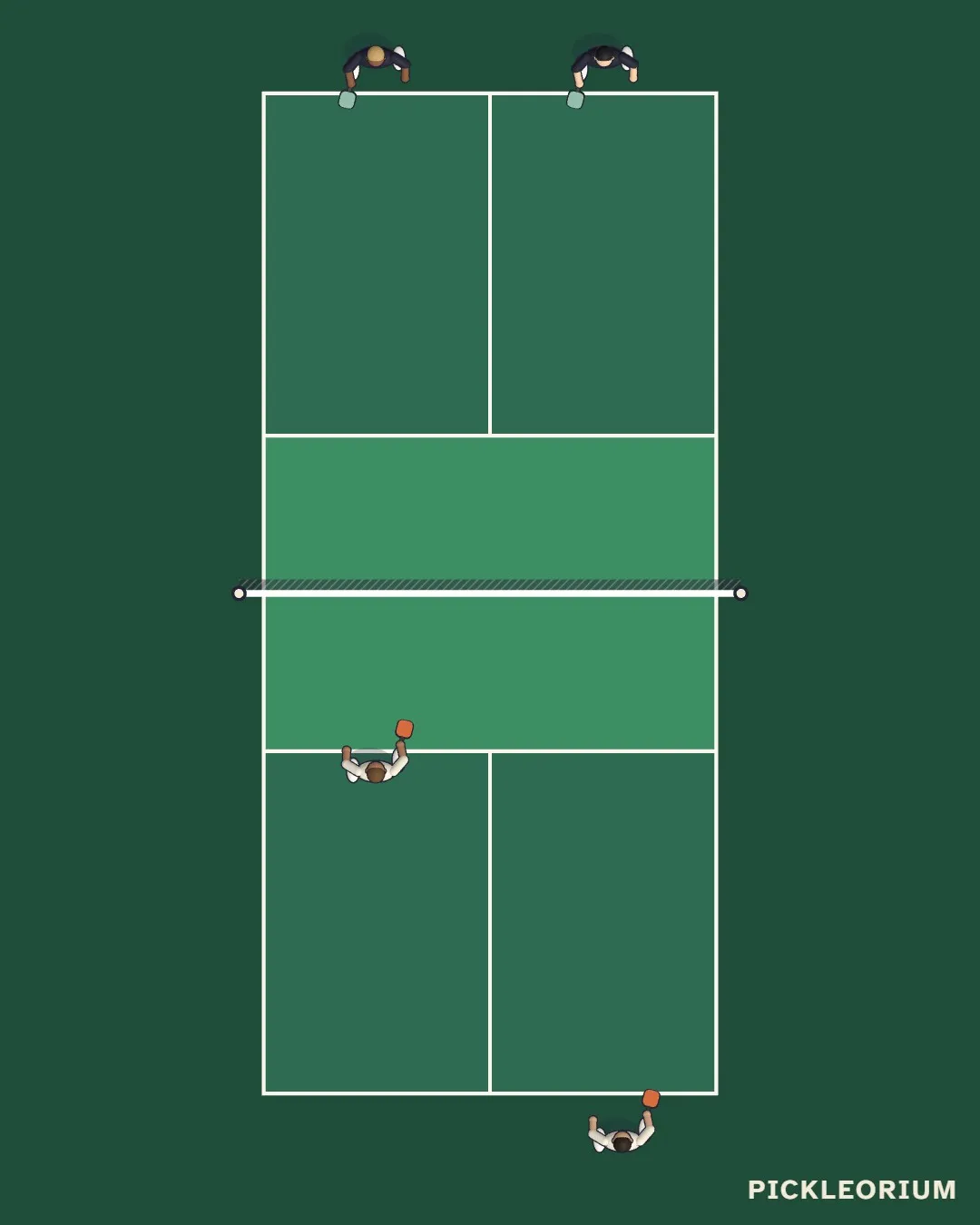
At the start of a pickleball point, the serving team stands behind the baseline and the returner’s partner stands at the kitchen line. The serving team’s whole serve-and-third-shot plan exists to get to the kitchen line.
The court: size, kitchen, baseline to kitchen line and net
The pickleball court dimensions are 20 feet wide and 44 feet long, baseline to baseline. On each side of the net, the pickleball kitchen, also called the non-volley zone, runs 7 feet from the net.
From the baseline it is 15 feet to the kitchen line: 22 feet from the net, minus the 7-foot kitchen. The serving team’s whole serve-and-third-shot plan exists to get to the kitchen line.
The net is 36 inches high at the posts and 34 inches in the center, its lowest point.
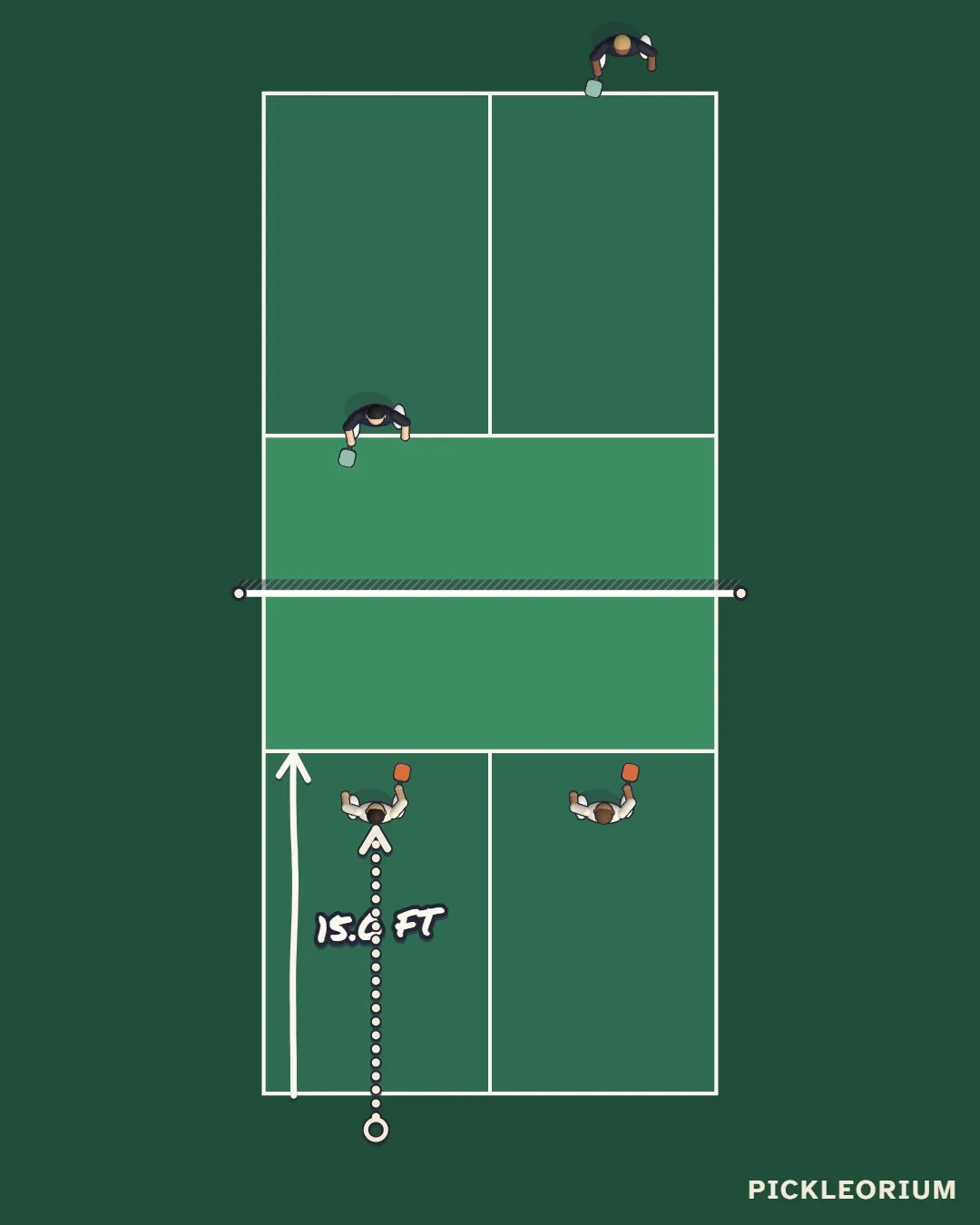
The legal serve: where to stand and where it lands
You serve from behind the baseline, in the service position the score and side call for. The standard serve is underhand, with contact below your waist and the paddle moving upward.
A legal serve goes diagonally, past the kitchen line, into the service box across from you. If it lands in the kitchen, it is a fault, and so is a serve that lands in the wrong box.
Aim deep: a shallow serve hands the returner an easy ball to attack.
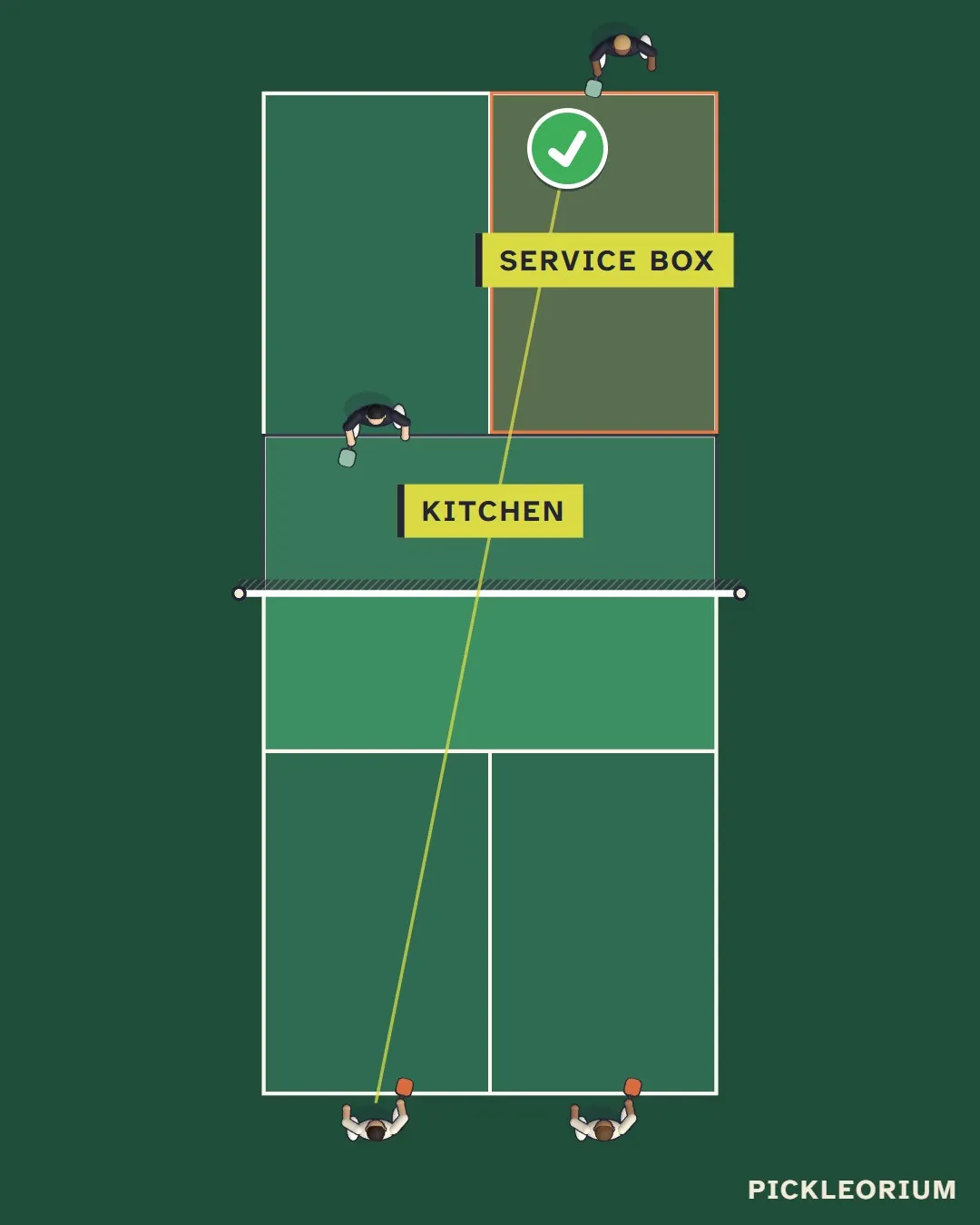
Depth beats speed on the serve
A shallow serve hands the returner an easy ball to attack. Depth beats speed: the deep, consistent serve is the default serve every time.
If you find yourself serving short or steering for aces, choose deep and in over pace, and keep consistency first. Never sacrifice accuracy for power.
The target is the deep backhand corner, within 2 feet of the baseline.
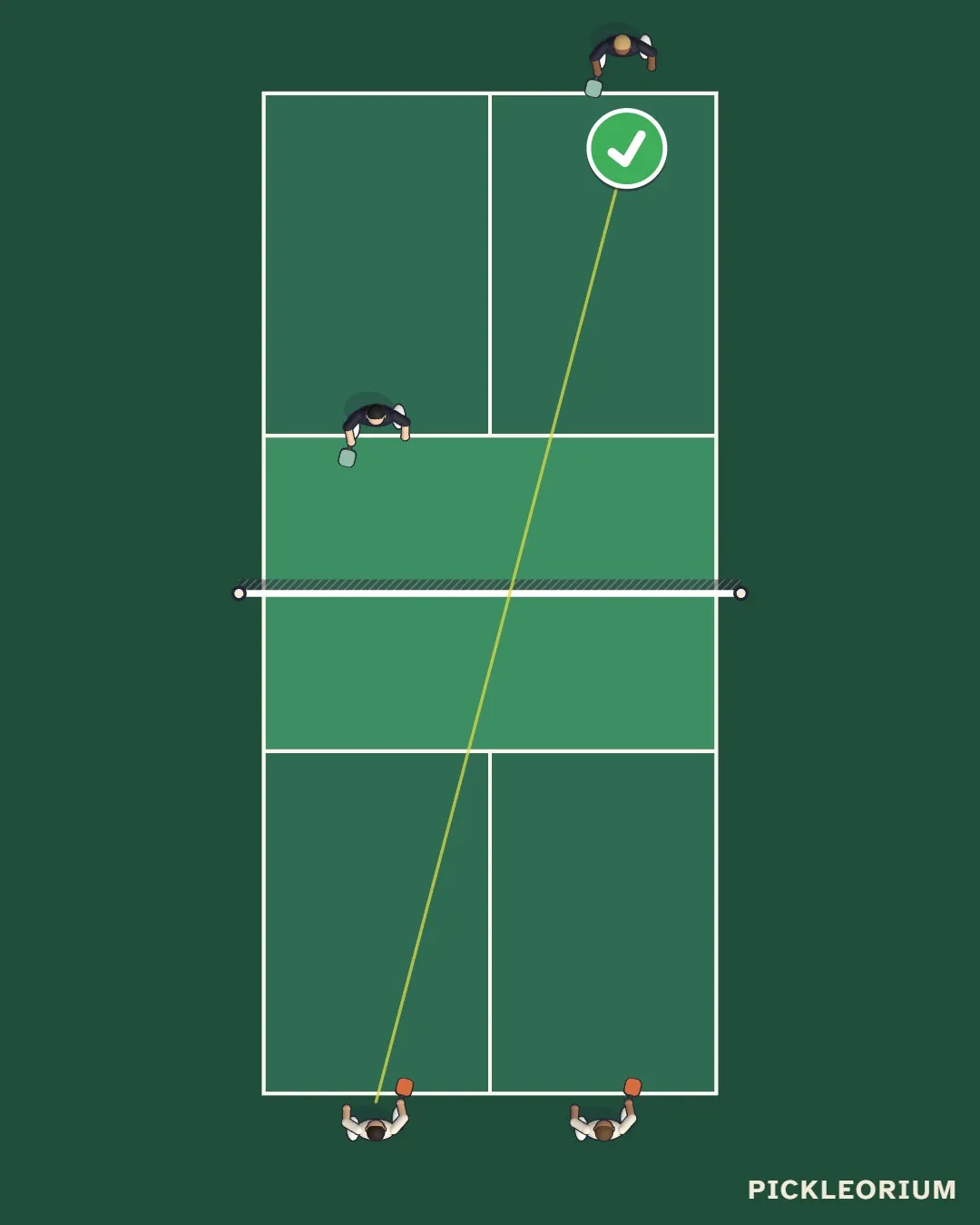
The return: where the returner and the partner go
At the start of the point, the server and the server’s partner both stand behind the baseline. The returning team has the inherent advantage: the two-bounce rule keeps the servers back.
The returner’s partner starts at the kitchen line, toes on the line, paddle up. That player watches the server, not their partner’s return.
The returner hits a deep crosscourt return with high clearance, sprints forward, and should reach the kitchen line within one or two balls.
- Hit a deep crosscourt return with high clearance.
- Sprint forward as you hit the ball.
- Reach the kitchen line within one or two balls of the return.
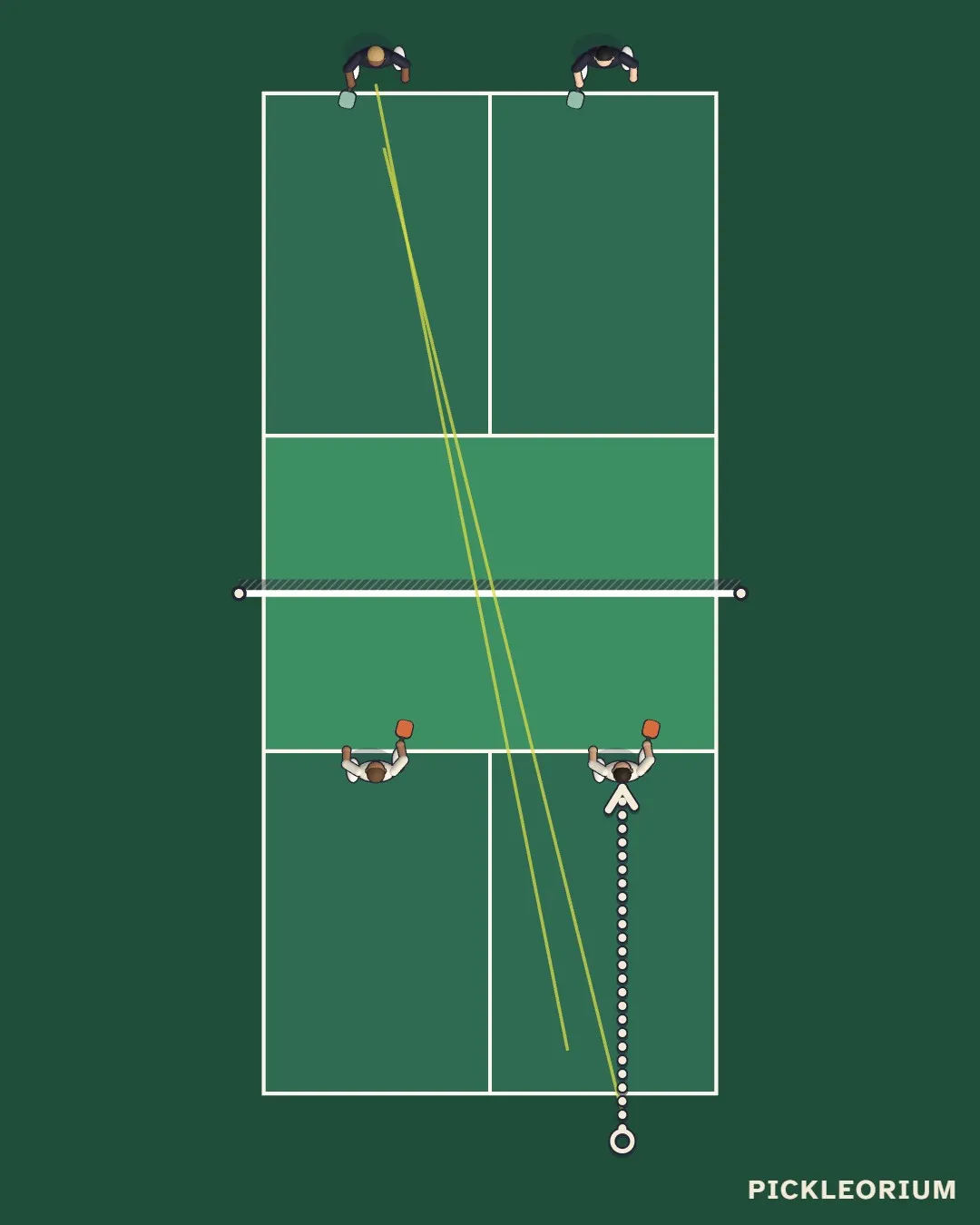
Where each player stands to serve and return
When you serve, you stand 1 to 2 feet behind the baseline, and your partner is also behind the baseline.
When your partner returns, you are the returner’s partner: you start at the kitchen line, toes on the line.
When you return, you start 2 to 3 feet behind the baseline, so deep serves do not jam you.
Key takeaways
- The court is 20 by 44 feet, the kitchen runs 7 feet from the net, and it is 15 feet from the baseline to the kitchen line.
- A legal serve is underhand, below the waist, diagonal and past the kitchen line. Aim deep.
- Depth beats speed: serve deep and in, every time, and never sacrifice accuracy for power.
- Serving, you and your partner both start behind the baseline. Returning, your partner starts at the kitchen line.
- The returner starts 2 to 3 feet behind the baseline, hits a deep crosscourt return, and should reach the kitchen line within one or two balls.
Sources
- USA Pickleball Official Rulebook, section 2
- our lesson library
How this was made: Written with AI from our lesson library and checked before posting.